12. विद्युत - Class 10 Science Hindi CBSE Notes
CBSE Notes for Class 10 are one of the most useful study resources for students who want to understand every chapter clearly and perform well in school examinations. At ATP Education, we provide carefully prepared chapter-wise CBSE Notes for Class 10 based on the latest CBSE syllabus and NCERT curriculum. These notes are designed to simplify learning, improve conceptual understanding, and help students revise important topics quickly before examinations.
CBSE Notes for Class 10 – Chapter-wise Revision Notes
Every chapter is explained in a simple and student-friendly manner so that learners can understand difficult concepts without confusion. Whether you are preparing for class tests, periodic assessments, half-yearly examinations, annual examinations, or board-oriented assessments, our Class 10 CBSE Notes help you revise the complete syllabus in less time while covering all the important concepts.
12. विद्युत - Class 10 Science Hindi CBSE Notes
12. विद्युत
12. विद्युत (Elecricity)
घर्षणीक विद्युत (Frictional electricity): रगड़ या घर्षण से उत्पन्न विद्युत को घर्षणीक विद्युत कहते हैं |
विद्युत आवेश (Electric charge): विद्युत आवेश दो प्रकार के होते हैं |
1. धन आवेश (Positive charge): कांच कि छड को जब रेशम के धागे से रगडा जाता है तो इससे प्राप्त आवेश को धन आवेश कहते हैं |
2. ऋण आवेश (Negative charge): एबोनाईट कि छड को ऊन के धागे से रगडा जाता है तो इस प्रकार प्राप्त आवेश को ऋण आवेश कहा जाता है |
- इलेक्ट्रानों कि कमी के कारण धन आवेश उत्पन्न होता है |
- इलेक्ट्रानों कि अधिकता से ऋण आवेश उत्पन्न होता है |
विद्युत स्थैतिकता का आधारभूत नियम (Fundamental law of electrostatics):
- समान आवेश एक दुसरे को प्रतिकर्षित करती हैं |
- असमान आवेश एकदूसरे को आकर्षित करती हैं |
स्थैतिक विद्युत (Statics electricity): जब विद्युत आवेश विराम कि स्थिति में रहती हैं तो इसे स्थैतिक विद्युत कहते हैं |
धारा विद्युत (Current electricity): जब विद्युत आवेश गति में होता है तो इसे धारा विद्युत कहते हैं |
विद्युत धारा एवं आवेश (Electric Current And Charge):
जब किसी चालक से विद्युत आवेश बहता है तो हम कहते है कि चालक में विद्युत धारा है |
दुसरे शब्दों में, विद्युत आवेश के बहाव को विद्युत धारा कहते है |
विद्युत धारा को इकाई समय में किसी विशेष क्षेत्र से विद्युत आवेशों की मात्रा के बहाव से व्यक्त किया जाता है |
- विद्युत धारा किसी चालक/तार से होकर बहता है |
- विद्युत धारा एक सदिश राशि है |
इलेक्ट्रोनों का बहाव (Flowing/moving of electrons) :
इलेक्ट्रोंस बैटरी के ऋणात्मक टर्मिनल पर ऋण आवेश के द्वारा प्रतिकर्षित होते हैं तथा धन टर्मिनल पर धन आवेश पर आकर्षित होते हैं | इसलिए इलेक्ट्रोंस ऋण टर्मिनल से धन टर्मिनल की ओर प्रवाहित होते हैं | जब ये इलेक्ट्रॉन्स धन टर्मिनल तक पहुँचते हैं तो एक रासायनिक प्रतिक्रिया से वे बैट्री के अंदर स्थान्तरित हो जाते हैं और और पुन: ऋण टर्मिनल पर आ जाते हैं | इस प्रकार इलेक्ट्रॉन्स प्रवाहित होते हैं |

(एक परिपथ तथा बैट्री से इलेक्ट्रान का बहाव )
चालक (Conductor) :
वे पदार्थ जो अपने से होकर विद्युत आवेश को आसानी से प्रवाहित होने देते हैं चालक कहलाते हैं | उदाहरण : तांबा, सिल्वर, एल्युमीनियम इत्यादि |
- अच्छे चालक धारा के प्रवाह का कम प्रतिरोध करते हैं |
- कुचालकों का धारा के प्रवाह की प्रतिरोधकता बहुत अधिक होती है |
कुचालक (Insulator) : वे पदार्थ जो अपने से होकर विद्युत धारा को प्रवाहित नहीं होने देते हैं वे पदार्थ विद्युत के कुचालक कहलाते हैं | उदाहरण : रबड़, प्लास्टिक, एबोनाईट और काँच इत्यादि |
चालकता (Cunductivity) : चालकता किसी चालक का वह गुण है जिससे यह अपने अंदर विद्युत आवेश को प्रवाहित होने देते हैं |
अतिचालकता (Supercunductivity) : अतिचालकता किसी चालक में होने वाली वह परिघटना है जिसमें वह बहुत कम ताप पर बिल्कुल शून्य विद्युत प्रतिरोध करता है |
कूलाम्ब का नियम (Coulomb's law) : किसी चालक के दो बिन्दुओं के बीच आवेशों पर लगने वाले आकर्षण या प्रतिकर्षण बल, आवेशों के गुणनफल (q1q2) के अनुक्रमानुपाती होते हैं और उनके बीच की दुरी (r) के वर्ग का व्युत्क्रमानुपाती होते हैं |
गणितीय विधि से ,
F ∝ q1q2 ......................... (i)
F ∝ 1/ r2 ..........................(ii)
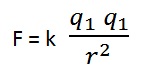
k एक स्थिरांक है परन्तु k का मान दो आवेशों के बीच उपस्थित माध्यम की प्रकृति पर निर्भर करता है |
k का निर्वात में आवेश 9 × 10⁹ Nm2/C2 होता है |
विद्युत परिपथ (Electric Circuit) :
किसी विद्युत धारा के सतत तथा बंद पथ को विद्युत परिपथ कहते हैं |
विद्युत का प्रवाह (The flow of the electricity):
आवेशों की रचना इलेक्ट्रोन करते हैं | विद्युत धारा को धनआवेशों का प्रवाह माना गया तथा धनावेश के प्रवाह की दिशा ही विद्युत धारा की दिशा माना गया | परिपाटी के अनुसार किसी
विद्युत परिपथ में इलेक्ट्रॉनों जो ऋणआवेश हैं, के प्रवाह की दिशा के विपरीत दिशा को
विद्युत धारा की दिशा माना जाता है।
यदि किसी चालक की किसी भी अनुप्रस्थ काट से समय t में नेट आवेश Q प्रवाहित होता है तब उस अनुप्रस्थ काट से प्रवाहित विद्युत धारा I को इस प्रकार व्यक्त करते हैंः
I = Q/t
विद्युत आवेश का SI मात्रक (unit) कूलम्ब (C) है, जो लगभग 6×10¹⁸ इलेक्ट्रोनों में समाए आवेश के तुल्य होता है |
कूलम्ब (Coulomb) : विद्युत आवेश का SI मात्रक (unit) कूलम्ब (C) है, जो लगभग 6×10¹⁸ इलेक्ट्रोनों में समाए आवेश के तुल्य होता है |
एक इलेक्ट्रान पर आवेश = -1.6 × 10⁻¹⁹ कूलम्ब (C).
एक प्रोटोन पर आवेश = 1.6 × 10⁻¹⁹ कूलम्ब (C).
आवेश संरक्षण का नियम (Law of conservation of charge): विद्युत आवेशों को न तो उत्पन्न किया जा सकता है और न ही विनाश किया जा सकता है | इसका सिर्फ एक पिंड से दुसरे पिंड तक स्थानांतरण किया जा सकता है |
एम्पियर (Ampere): यह विद्युत धारा का SI मात्रक है | जब एक कूलम्ब आवेश को किसी चालक से 1 सेकंड तक प्रवाहित किया जाता है तो इसे 1 एम्पियर धारा कहते है |
1A = 1C/1s;
- धारा की छोटी मात्रा को मिलीएम्पियर में मापा जाता है |
- (1 mA = 10-3 A) या मिलीएम्पियर (1 μA = 10-6 A)
विद्युत धारा परिपथ में बैट्री या सेल के धन टर्मिनल (+) से ऋण टर्मिनल (-) की ओर प्रवाहित होती है |
ऐमीटर (Ammeter): परिपथों की विद्युत धारा मापने के लिए जिस यंत्र का उपयोग करते हैं उसे ऐमीटर कहते हैं।
इसे सदैव जिस परिपथ में विद्युत धारा मापनी होती है, उसके श्रेणीक्रम में संयोजित करते हैं।
गैल्वेनोमीटर (Galvanometer) : It गैल्वेनोमीटर एक युक्ति है जो किसी विद्युत परिपथ में उपस्थित धारा का पता लगाता है |
परंपरागत धारा (Conventional current) : ,परंपरागत रूप से, धन आवेशों की गति की दिशा को धारा की दिशा माना जाता है | परंपरागत धारा की दिशा, प्रवाहित होने वाले इलेक्ट्रोनों की दिशा का विपरीत होता है |
वैद्युतस्थैतिक विभव (Electrostatic potential) :
विद्युत स्थैतिक विभव अनंत से किसी विद्युत क्षेत्र के किसी बिंदु तक एक कूलाम्ब के इकाई धन आवेश को लाने में किए गए कार्य की मात्रा से परिभाषित किया जाता है | इसका S.I मात्रक वोल्ट है |
12. विद्युत
बिभावंतर (Potential Difference):
इलेक्ट्रोंस तभी गति करते हैं जब किसी परिपथ या चालक के दोनों सिरों के बीच वैद्युत दाब के अंतर हो, वैद्युत दाब में इस अंतर को विभवान्तर कहते हैं |
- इस विभवान्तर को बैटरी, एक या एक से अधिक सेलों को जोड़कर अथवा डायनेमो द्वारा उत्पन्न किया जाता है |
- किसी सेल के भीतर होने वाली रासायनिक अभिक्रिया सेल के टर्मिनलों के बीच विभवांतर उत्पन्न कर देती है, ऐसा उस समय भी होता है जब सेल से कोई विद्युत धारा नहीं ली जाती।
- जब सेल को किसी चालक परिपथ अवयव से संयोजित करते हैं तो विभवांतर उस चालक के आवेशों में गति ला देता है और विद्युत धारा उत्पन्न हो जाती है। किसी विद्युत परिपथ में विद्युत धारा बनाए रखने के लिए सेल अपनी संचित रासायनिक ऊर्जा खर्च करता है।
Potential difference between two points:
किसी धारावाही विद्युत परिपथ के दो बिन्दुओं के बीच विद्युत विभवांतर को हम उस कार्य द्वारा परिभाषित करते हैं जो एकांक आवेश को एक बिंदु से दूसरे बिंदु तक लाने
में किया जाता है।

अथवा

- विद्युत विभवांतर का SI मात्राक वोल्ट (V) है जिसे इटली के भौतिकविज्ञानी
अलेसान्द्रो वोल्टा के नाम पर रखा गया है।
वोल्टमीटर (Voltmeter):
वोल्टमीटर एक यन्त्र है जिससे किसी चालक के दो सिरों के बीच उत्पन्न विभवान्तर को मापा जाता है |
परिभाषा : विभवांतर की माप एक यंत्रा द्वारा की जाती है जिसे वोल्टमीटर कहते हैं।
1 वोल्ट विभवान्तर (One volt potential difference):
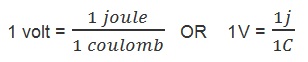
यदि किसी विद्युत धारावाही चालक के दो बिन्दुओं के बीच एक कूलॉम आवेश को एक दूसरे बिंदु तक ले जाने में 1 जूल कार्य किया जाता है तो उन दो बिन्दुओं के बीच विभवांतर 1 वोल्ट होता है।

वोल्टमीटर का संयोजन (Connection of voltmeter):
वोल्टमीटर को सदैव उन बिन्दुओं से पार्श्वक्रम या समांतर क्रम में संयोजित करते हैं जिनके बीच विभवांतर मापना होता है।

ऊपर दिए आकृति में जो की एक विद्युत परिपथ है में प्रतिरोधक R2 के दोनों सिरों के बीच उत्पन्न विभवान्तर मापना है तो इसके दो सिरों पर वोल्टमीटर को पार्श्व क्रम या समांतर क्रम में संयोजित कर देंगे | जैसा आकृति में दिखाया गया है, इस प्रकार के संयोजन को पार्श्व क्रम या समान्तर क्रम कहते हैं |
सेल या बैटरी (Cells Or Battery): यह एक युक्ति है जो किसी चालक के दो बिन्दुओं के बीच विभवान्तर को बनाये रखने में सहायता करता है |
सेल (Cell): सेल एक युक्ति है जो अपने अन्दर संचित रासायनिक ऊर्जा का उपयोग कर किसी चालक के दो सिरों के बीच विभवान्तर उत्पन्न करता है, जिससे आवेशों के गति आती है और विद्युत धारा उत्पन्न करता है |

सेल का सांकेतिक चिन्ह
बैटरी (Battry): दो या दो से अधिक सेलों के संयोजन से बने युक्ति को बैटरी कहते है |

बैटरी का सांकेतिक चिन्ह
विद्युत प्रभावन बल - Electromotive force (EMF): यह सेल या बैटरी द्वारा लगाया गया वह बल है जो किसी चालक से विद्युत धारा उत्पन्न करने के लिए किया जाता है |
12. विद्युत
ओम का नियम (Ohm's Law):
"किसी धातु के तार में प्रवाहित होने वाली विद्युत धारा उस तार के सिरों के बीच विभवांतर के अनुक्रमानुपाती होती है, परंतु तार का ताप समान रहना चाहिए। इसे ओम
का नियम कहते हैंं।"
इस नियम के अनुसार,
V ∝ I
or V = RI
इस विभव-धारा ग्राफ को देखिए |

हम देखते हैं कि विभवान्तर बढ़ने के साथ-साथ विद्युत धारा का मान भी बढ़ जाता है और विभवान्तर घटने से धारा भी घट जाता है अर्थात इनमें अनुक्रमानुपातिक संबंध है | इसे ही ओम का नियम कहते है |
प्रतिरोध (Resistance):
प्रतिरोध चालक का वह गुण है जिससे वह अपने से होकर प्रवाहित होने वाले विद्युत धारा के प्रवाह का विरोध करता है | चालक के इस गुण को प्रतिरोध कहते हैं |
ओम के नियम के उपयोग से:
प्रतिरोध = विभवान्तर/धारा

- प्रतिरोध का SI मात्रक Ohm(Ω) है |
- V/I = R, जो कि एक स्थिरांक है |
1 ओम प्रतिरोध (1 Ohm of resistance): if यदि किसी चालक के दोनों सिरों के बीच विभवान्तर 1 V है तथा उससे 1 A विद्युत धारा प्रवाहित होती है, तब उस चालक का प्रतिरोध R, 1 Ω होता है |

- The current through a resistor is inversely proportional to its resistance.
- If the resistance is doubled the current gets halved.
- In many practical cases it is necessary to increase or decrease the current in an electric circuit.
Variable resistance: A component used to regulate current without changing the voltage source is called variable resistance.
Rheostat: It is a device which is often used to change the resistance in the electric circuit.
Resistor: A conductor having some appreciable resistance is called a resistor.
Some points:
- Certain components offer an easy path for the flow of electric current while the others resist the flow.
- motion of electrons in an electric circuit constitutes an electric current.
- The electrons, however, are not completely free to move within a
conductor. - They are restrained by the attraction of the atoms among which they move.
- motion of electrons through a conductor is retarded by its resistance.
Good conductor: A component of a given size that offers a low
resistance is a good conductor.
Poor conductor: A component of identical size that offers a higher resistance is a poor conductor.
Resistance of a conductor depends on followings factors:
(i) On Length of conductor.
(ii) On Area of cross-section of conductor.
(iii) On the nature of conductor's materail.
Relation among Length, Area and Resistance:
Resistance of a uniform metallic conductor is directly proportional to its length (l) and inversely proportional to the area of cross-section (A).
This gives:
R ∝ l .................. (i)
and R ∝ l/A ................... (ii)
R ∝ l/A using (i) and (ii)
or,
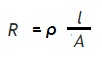
where ρ (rho) is a constant of proportionality and is called the electrical
resistivity of the material of the conductor.
The SI unit of resistivity is Ω m.
Resistivity: Resistivity is a characteristic property of the material. S. I unit of resistivity is ohm (Ω). It is denoted by p.
- The metals and alloys have very low resistivity in the range of 10-8 Ω m to 10-6 Ω m.They are good conductors of electricity.
- Insulators like rubber and glass have resistivity of the order of 1012 to 1017 Ω m.
- Both the resistance and resistivity of a material vary (परिवर्तित) with temperature.
मिश्रधातुओं के गुण (Charactristics of alloy):
(i) एलॉय जिस धातु से बने होते है उन धातुओं की तुलना में उनसे बने मिश्र धातुओं का गलनांक अधिक होता है |
(ii) मिश्रधातु ऊँच तापमान पर भी आसानी से इनका दहन नहीं होता है |
(iii) इनका गलनांक ऊँच होता है |
यही कारण है की मिश्रधातुओं का उपयोग सामान्यत: विद्युत तापक यंत्रों में किया जाता है, जैसे - विद्युत इस्त्री , टोस्टर इत्यादि | विद्युत बल्बों की तंतु के लिए एकमात्र टंगस्टन का ही उपयोग किया जाता है | टंग्स्टन एक मिश्रधातु है जिसका गलनांक बहुत ही ऊँच होता है | जहाँ तांबा और एल्युमीनियम का सामान्य उपयोग विद्युत प्रवाह चालक के रूप में किया जाता है |
12. विद्युत
विद्युत धारा का तापीय प्रभाव:
- सेल के भीतर होने वाली रासायनिक अभिक्रिया सेल केदो टर्मिनलों के बीच विभवान्तर उत्पन्न करती है, जो बैटरी से संयोजित किसी प्रतिरोधक अथवा प्रतिरोधकों के किसी निकाय में विद्युत धारा प्रवाहित करने के लिए इलेक्ट्रानों में गति स्थापित करता है |
- विद्युत धारा को बनाए रखने में अथवा साधित्रों/उपकरणों को कार्य करवाने में स्रोत कि ऊर्जा का कुछ भाग खर्च हो जाता है जबकि शेष ऊर्जा साधित्रों/उपकरणों के ताप को वृद्धि करने में खर्च हो जाता है |
विद्युत धारा का तापीय प्रभाव: स्रोत की ऊर्जा का कुछ ही भाग उपयोगी कार्यों में उपयोग होता है | स्रोत का शेष ऊर्जा उस ऊष्मा को उत्पन्न करने में खर्च हो जाता है जो उस साधित्र/उपकरण कि ताप में वृद्धि करता है | इसे विद्युत का तापीय प्रभाव कहते हैं |
जूल तापन का नियम: किसी प्रतिरोधक में उत्पन्न होने वाली ऊष्मा दिए गए प्रतिरोधक में प्रवाहित होने वाली विद्युत धारा के वर्ग के अनुक्रमानुपाती होती है एवं दी गयी विद्युत धारा के लिए प्रतिरोध और उस समय के अनुक्रमानुपाती होती है जिसके लिए दिए गए प्रतिरोध से विद्युत धारा प्रवाहित होती है | इस नियम को जूल तापन का नियम कहते हैं |
इसे H से सूचित करते हैं |
H = I2Rt
इस नियम से किसी साधित्र या प्रतिरोधक में विद्युत धारा के तापीय प्रभाव द्वारा उत्पन्न ऊष्मा को ज्ञात किया जाता है |
इस नियम के अनुसार:
किसी प्रतिरोधक में उत्पन्न होने वाली ऊष्मा (H)
(i) प्रतिरोधक में प्रवाहित होने वाली विद्युत धारा (I) के वर्ग के अनुक्रमानुपाती होती है |
(ii) उस प्रतिरोध (R) के अनुक्रमानुपाती होती है |
(iii) समय (t) के अनुक्रमानुपाती होती है |
जूल तापन के नियम को अर्थात (H = I2Rt) को गणितीय स्तर पर समझते हैं :
मान लीजिए कि किसी प्रतिरोधक (R) में (t) समय के लिए यदि विद्युत धारा प्रवाहित की जाती है एवं इसके दोनों सिरों के बीच विभवान्तर (V) है |

विद्युत धारा के तापीय प्रभाव के कुछ अनुप्रयोग:
(1) विद्युत हीटर
(2) विद्युत इस्तरी
(3) विद्युत गीजर
(4) विद्युत टोस्टर
(5) विद्युत् बल्ब
नोट: उपरोक्त सभी साधित्र/उपकरण विद्युत धारा के तापीय प्रभाव के प्रयोग से चलायी जाती है |
विद्युत धारा के तापीय प्रभाव से विद्युत परिपथ के अवयवों पर प्रभाव :
(i) अवयवों के ताप में वृद्धि कर सकता है |
(ii) अवयवों के गुणों में परिवर्तन हो सकता है |
उदाहरण:
12. विद्युत
Why Choose CBSE Notes for Class 10?
Reading the complete textbook is essential for building knowledge, but revision notes help students organize that knowledge effectively. Our CBSE Revision Notes for Class 10 summarize every chapter by highlighting important concepts, definitions, keywords, formulas, examples, and important points that students should remember during examinations. This approach saves valuable study time and makes revision much easier.
Students often find it difficult to revise lengthy chapters before examinations. Our notes solve this problem by presenting important information in a structured format that is easy to understand and remember. Regular revision using these notes helps improve confidence and strengthens conceptual clarity.
Chapter-wise Study Material
Each chapter included in the CBSE Notes for Class 10 section is prepared according to the latest academic session. Every topic is explained in simple language while maintaining accuracy and completeness. Students can easily revise important concepts, learn key points, and strengthen their understanding of each chapter.
The notes are suitable for daily classroom learning, homework preparation, revision before examinations, and self-study. They also serve as an excellent companion to NCERT textbooks by presenting the most important information in an organized manner.

Explore CBSE Notes Class 10 Science
Chapter-wise NCERT Solutions for Class 6 to 12 prepared according to the latest CBSE syllabus.
Hindi Medium

CBSE Notes Class 10 Science
Chapter 1. रासायनिक अभिक्रियाएँ और समीकरण (CBSE NOTES)
1. रासायनिक अभिक्रियाएँ और समीकरण ()
Explore Now →
CBSE Notes Class 10 Science
Chapter 2. अम्ल, क्षार एवं लवण (CBSE NOTES)
2. अम्ल, क्षार एवं लवण ()
Explore Now →
CBSE Notes Class 10 Science
Chapter 4. कार्बन और इसके यौगिक (CBSE NOTES)
4. कार्बन और इसके यौगिक ()
Explore Now →
CBSE Notes Class 10 Science
Chapter 5. तत्वों के आवर्त वर्गीकरण (CBSE NOTES)
5. तत्वों के आवर्त वर्गीकरण ()
Explore Now →
CBSE Notes Class 10 Science
Chapter 7. नियंत्रण एवं समन्वय (CBSE NOTES)
7. नियंत्रण एवं समन्वय ()
Explore Now →
CBSE Notes Class 10 Science
Chapter 8. जीव जनन कैसे करते है (CBSE NOTES)
8. जीव जनन कैसे करते है ()
Explore Now →
CBSE Notes Class 10 Science
Chapter 9. अनुवांशिकता एवं जैव विकास (CBSE NOTES)
9. अनुवांशिकता एवं जैव विकास ()
Explore Now →
CBSE Notes Class 10 Science
Chapter 10. प्रकाश-परावर्तन एवं अपवर्तन (CBSE NOTES)
10. प्रकाश-परावर्तन एवं अपवर्तन ()
Explore Now →
CBSE Notes Class 10 Science
Chapter 11. मानव-नेत्र एवं रंगबिरंगी दुनियाँ (CBSE NOTES)
11. मानव-नेत्र एवं रंगबिरंगी दुनियाँ ()
Explore Now →
CBSE Notes Class 10 Science
Chapter 13. विद्युत धारा का चुम्बकीय प्रभाव (CBSE NOTES)
13. विद्युत धारा का चुम्बकीय प्रभाव ()
Explore Now →
CBSE Notes Class 10 Science
Chapter 14. उर्जा के स्रोत (CBSE NOTES)
14. उर्जा के स्रोत ()
Explore Now →
CBSE Notes Class 10 Science
Chapter 15. हमारा पर्यावरण (CBSE NOTES)
15. हमारा पर्यावरण ()
Explore Now →
CBSE Notes Class 10 Science
Chapter 16. प्राकृतिक संसाधनों का प्रबंधन (CBSE NOTES)
16. प्राकृतिक संसाधनों का प्रबंधन ()
Explore Now →Benefits of Using ATP Education Notes
- Latest CBSE syllabus based notes.
- Chapter-wise revision material.
- Easy-to-understand explanations.
- Important concepts and key points.
- Quick revision before examinations.
- Useful for school tests and annual exams.
- Available in Hindi and English Medium.
- Free educational resources for every student.
Your CBSE Notes Library Class 10:
Chapter-wise CBSE Notes for Class 6 to 12 prepared according to the latest CBSE syllabus.
HINDI MEDIUM
CBSE Class 10 Economics
Class 10 Economics CBSE Notes
Arthik Vikas ki Samajh Open Notes
Explore Now →
Your CBSE Notes Library For Class 10
Chapter-wise CBSE Notes for Class 6 to 12 prepared according to the latest CBSE syllabus.
ENGLISH MEDIUM
NCERT Solutions Class 10 SOCIAL SCIENCE-HISTORY
Class 10 SOCIAL SCIENCE-HISTORY CBSE Notes
India and the Contemporary World-II Open Book
Explore Now →
NCERT Solutions Class 10 History
Class 10 History CBSE Notes
India and the Contemporary World-II Open Book
Explore Now →
NCERT Solutions Class 10 Economics
Class 10 Economics CBSE Notes
Understanding Economic Development Open Book
Explore Now →Prepare with Confidence
Success in examinations depends on regular practice, conceptual understanding, and effective revision. Our Class 10 CBSE Notes are designed to help students study smarter instead of studying longer. By revising chapter-wise notes regularly, learners can improve their understanding, remember important concepts for a longer period, and write better answers during examinations.
Along with these notes, students can also explore NCERT Solutions, MCQ Questions, Online Tests, Important Questions, Study Materials, and other learning resources available on ATP Education. Together, these resources provide complete academic support for effective learning and better examination preparation.
Start exploring the CBSE Notes for Class 10 today and make your learning journey easier with well-organized chapter-wise notes, quick revision material, and reliable study resources prepared especially for CBSE students.
Benefits of Studying with Our CBSE Notes
- Chapter-wise Coverage: Every chapter is explained in a structured and easy-to-follow format.
- Latest CBSE Syllabus: Notes are prepared according to the latest CBSE curriculum and NCERT guidelines.
- Quick Revision: Revise important concepts, formulas, definitions, and key points in less time.
- Simple Language: Difficult topics are explained in clear and student-friendly language for better understanding.
- Concept-Based Learning: Focus on understanding concepts instead of memorizing answers.
- Exam-Oriented Preparation: Helps students prepare effectively for class tests, unit tests, half-yearly, annual, and board examinations.
- Subject-wise Organization: Easily access notes for Mathematics, Science, English, Hindi, Social Science, Physics, Chemistry, Biology, Economics, and more.
- Time-Saving Study Material: Well-organized notes reduce study time and improve learning efficiency.
- Improves Answer Writing: Learn important points and present answers in a better and more organized manner.
- Boosts Confidence: Regular revision strengthens concepts and increases confidence before examinations.
- Free Learning Resource: Access high-quality CBSE Notes without any subscription or hidden charges.
- Available in Hindi & English Medium: Study comfortably in your preferred medium with chapter-wise notes.